Sale Price:
$15.00
Original Price:
$22.00
Your great-grandmother never counted macros. She made soup first, ate her biggest meal when the sun was highest, and was done eating hours before bed. Every food culture that fed its people well for generations arrived at that same rhythm on their own, without ever comparing notes. Not because they had a study telling them digestive fire peaks at midday. Because they watched what happened to people who ate that way, and what happened to people who didn't.
We lost that rhythm. We skip breakfast, eat a sad desk salad at noon, and call a heavy plate of pasta at 9pm dinner, then wonder why we can't sleep, why we're bloated, why nothing feels like it's working even when we're doing everything "right." The Warm Table is about coming back to the way your body was actually built to eat.
WHAT IS INSIDE
The ancestral eating rhythm explained, why cultures across the world independently built their meals the same way, soup to open, the biggest meal at midday, and a light dinner before dark, and the real physiology behind why your body still works better this way.
A full note on ingredients, what "good" actually means when a recipe calls for good butter, good broth, or good olive oil, and how to source real food without needing a farm of your own.
The nutritional science behind every recipe, not just what to eat but why it works. Why fresh marjoram does real digestive work beyond flavor, why the capsaicin in paprika supports circulation, why a squeeze of lemon stirred into a braise at the end isn't decoration, it's what helps your body actually absorb the iron you just spent hours cooking.
Four full chapters, each built around a real principle instead of a theme. The Soup Course to warm the body before the meal arrives. The Main Table for the big midday meal your body is actually built to handle. The Light Dinner for evenings that don't ask your gut to work overtime before bed. Ferments, Sauces and Staples, the pantry basics that make everything else in the book easier.
Traditional Central and Eastern European technique explained clearly, how to build a proper braise, why bone broth belongs under almost everything, what a strip of kombu quietly does to a pot of stock, and how fermentation actually works from a cabbage to a jar of pickles.
Complete ingredient and method breakdowns for every recipe, written so a total beginner can follow it start to finish, and someone who already cooks will still walk away having learned something.
THE RECIPES
44 full recipes across four chapters, each with complete ingredient lists, clear step by step method, and a notes section covering storage, substitutions, and what to do with it the next day.
The Soup Course, ten soups built to open a meal, from Classic Chicken Broth with Homemade Noodles and Liver Dumplings to Nettle Soup, Goulash Soup, and Borscht with Sour Cream and Fresh Dill.
The Main Table, ten full dinners built for the midday meal, Svickova, Roast Chicken, Roast Duck with Braised Cabbage, Stuffed Cabbage Rolls, and more, the kind of food that fills the house with a smell that means someone is home.
The Light Dinner, ten fast, easy plates for evenings that don't need a production, White Bean Mash with Roasted Kabocha Squash, Aglio e Olio, Tomato Olive Fish, and simple boards you can put together in fifteen minutes.
Ferments, Sauces and Staples, the four foundational recipes woven through the whole book, homemade sauerkraut, fermented cucumber pickles, electrolyte chimichurri, and knedliky, real Czech bread dumplings made from scratch.
WHO THIS IS FOR
Anyone who wants to eat the way their grandmother did without giving up their modern life. Anyone tired of diet culture treating food like a math problem and ready to get back to eating that actually nourishes. Anyone whose gut feels off, whose energy crashes every afternoon, or whose body just doesn't feel like it's absorbing what she's eating. And anyone ready to bring real, mineral dense, ancestral cooking back into a kitchen built for right now.
FORMAT
Instant digital download. PDF format. Yours to keep, print, and reference anytime.
Your great-grandmother never counted macros. She made soup first, ate her biggest meal when the sun was highest, and was done eating hours before bed. Every food culture that fed its people well for generations arrived at that same rhythm on their own, without ever comparing notes. Not because they had a study telling them digestive fire peaks at midday. Because they watched what happened to people who ate that way, and what happened to people who didn't.
We lost that rhythm. We skip breakfast, eat a sad desk salad at noon, and call a heavy plate of pasta at 9pm dinner, then wonder why we can't sleep, why we're bloated, why nothing feels like it's working even when we're doing everything "right." The Warm Table is about coming back to the way your body was actually built to eat.
WHAT IS INSIDE
The ancestral eating rhythm explained, why cultures across the world independently built their meals the same way, soup to open, the biggest meal at midday, and a light dinner before dark, and the real physiology behind why your body still works better this way.
A full note on ingredients, what "good" actually means when a recipe calls for good butter, good broth, or good olive oil, and how to source real food without needing a farm of your own.
The nutritional science behind every recipe, not just what to eat but why it works. Why fresh marjoram does real digestive work beyond flavor, why the capsaicin in paprika supports circulation, why a squeeze of lemon stirred into a braise at the end isn't decoration, it's what helps your body actually absorb the iron you just spent hours cooking.
Four full chapters, each built around a real principle instead of a theme. The Soup Course to warm the body before the meal arrives. The Main Table for the big midday meal your body is actually built to handle. The Light Dinner for evenings that don't ask your gut to work overtime before bed. Ferments, Sauces and Staples, the pantry basics that make everything else in the book easier.
Traditional Central and Eastern European technique explained clearly, how to build a proper braise, why bone broth belongs under almost everything, what a strip of kombu quietly does to a pot of stock, and how fermentation actually works from a cabbage to a jar of pickles.
Complete ingredient and method breakdowns for every recipe, written so a total beginner can follow it start to finish, and someone who already cooks will still walk away having learned something.
THE RECIPES
44 full recipes across four chapters, each with complete ingredient lists, clear step by step method, and a notes section covering storage, substitutions, and what to do with it the next day.
The Soup Course, ten soups built to open a meal, from Classic Chicken Broth with Homemade Noodles and Liver Dumplings to Nettle Soup, Goulash Soup, and Borscht with Sour Cream and Fresh Dill.
The Main Table, ten full dinners built for the midday meal, Svickova, Roast Chicken, Roast Duck with Braised Cabbage, Stuffed Cabbage Rolls, and more, the kind of food that fills the house with a smell that means someone is home.
The Light Dinner, ten fast, easy plates for evenings that don't need a production, White Bean Mash with Roasted Kabocha Squash, Aglio e Olio, Tomato Olive Fish, and simple boards you can put together in fifteen minutes.
Ferments, Sauces and Staples, the four foundational recipes woven through the whole book, homemade sauerkraut, fermented cucumber pickles, electrolyte chimichurri, and knedliky, real Czech bread dumplings made from scratch.
WHO THIS IS FOR
Anyone who wants to eat the way their grandmother did without giving up their modern life. Anyone tired of diet culture treating food like a math problem and ready to get back to eating that actually nourishes. Anyone whose gut feels off, whose energy crashes every afternoon, or whose body just doesn't feel like it's absorbing what she's eating. And anyone ready to bring real, mineral dense, ancestral cooking back into a kitchen built for right now.
FORMAT
Instant digital download. PDF format. Yours to keep, print, and reference anytime.


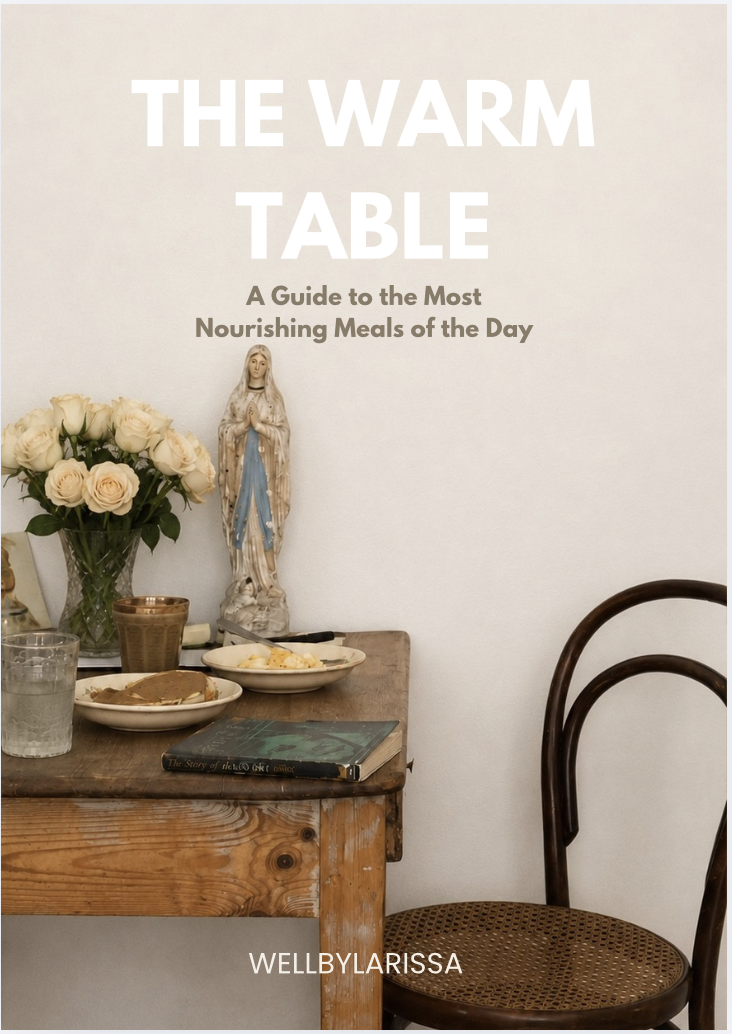 Image 1 of 7
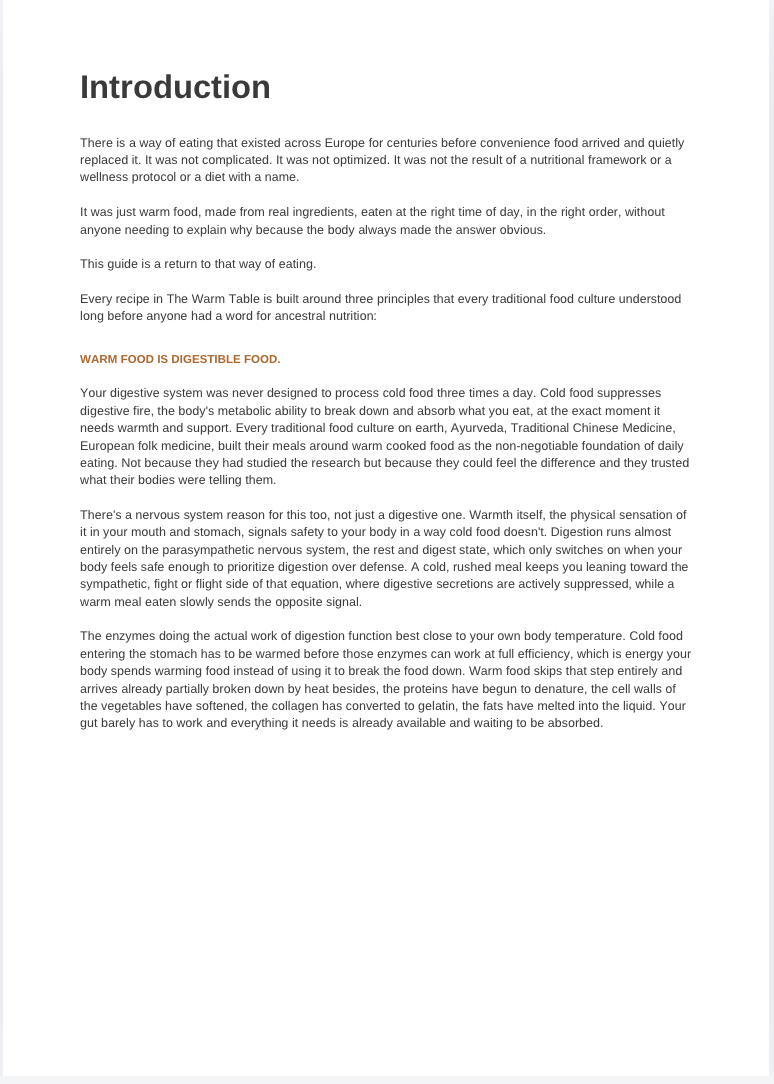 Image 2 of 7
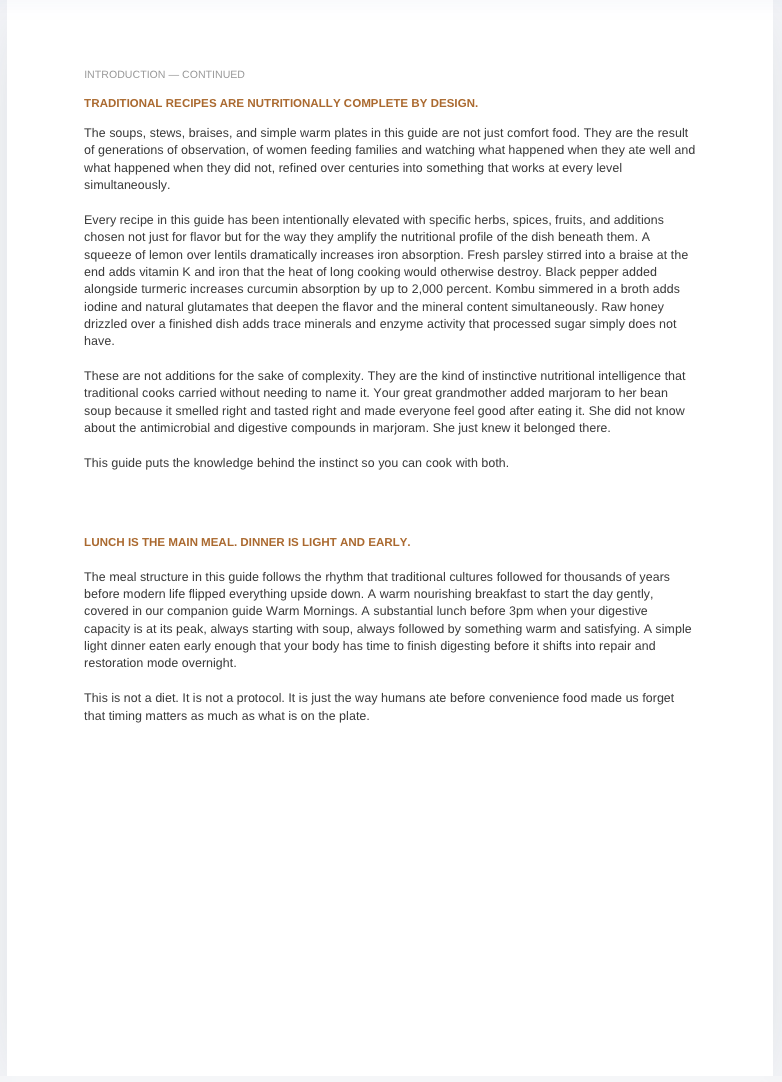 Image 3 of 7
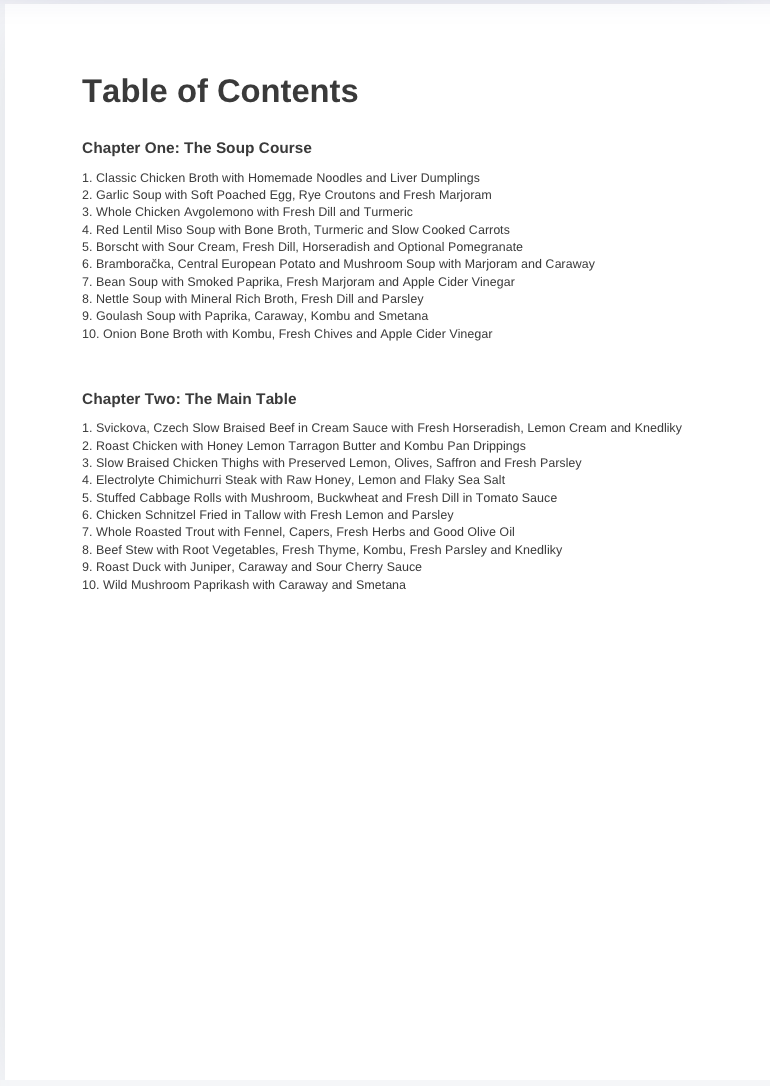 Image 4 of 7
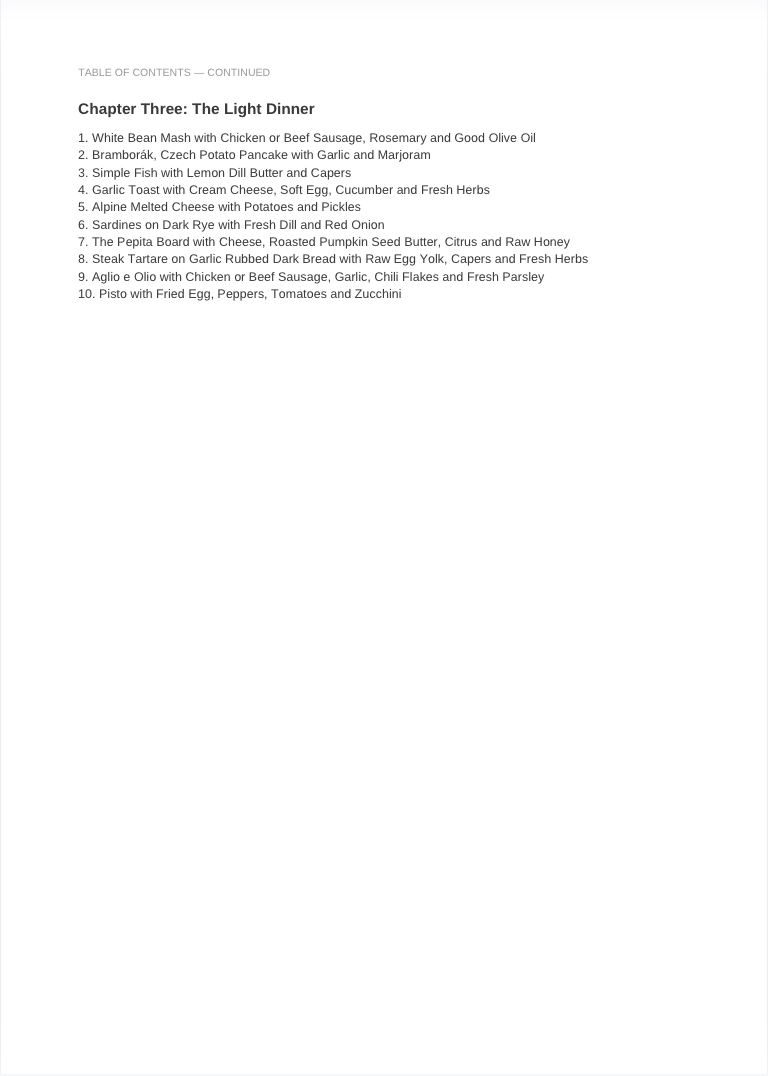 Image 5 of 7
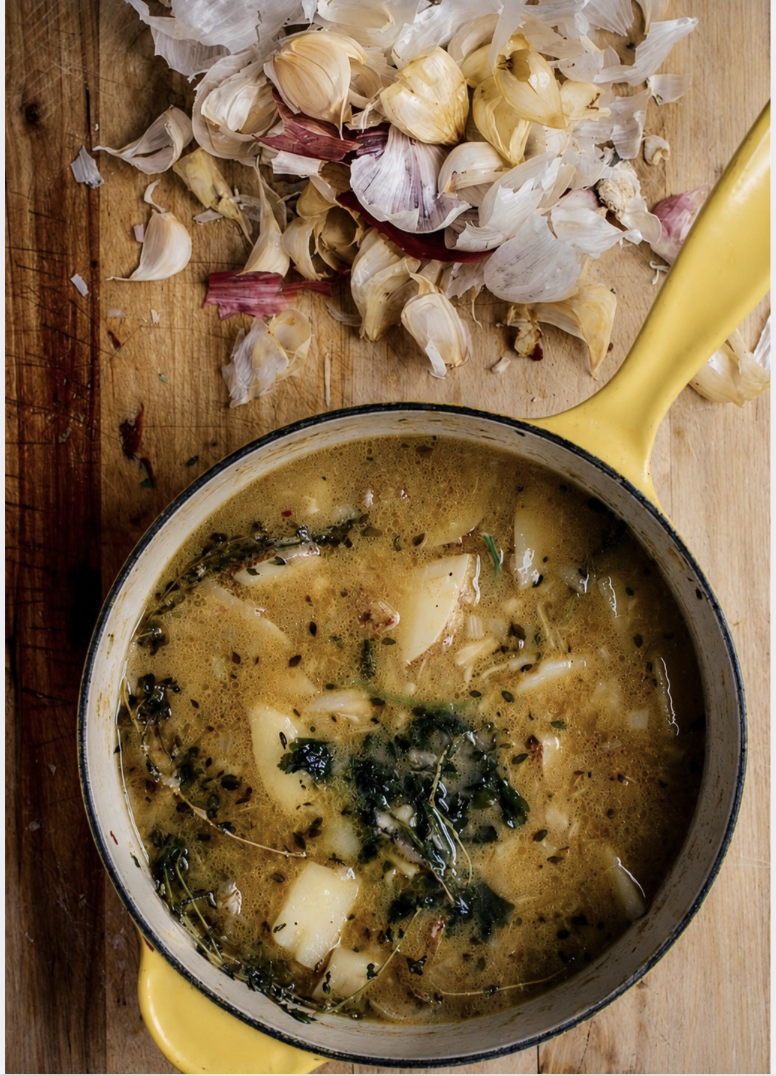 Image 6 of 7
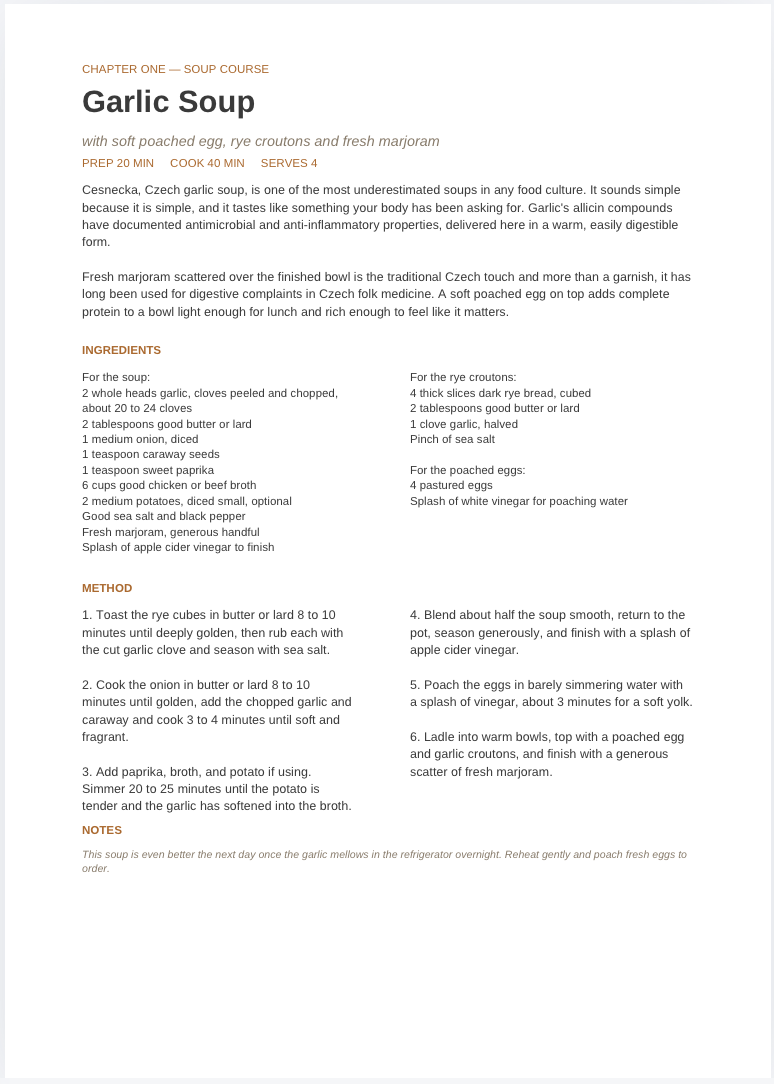 Image 7 of 7